
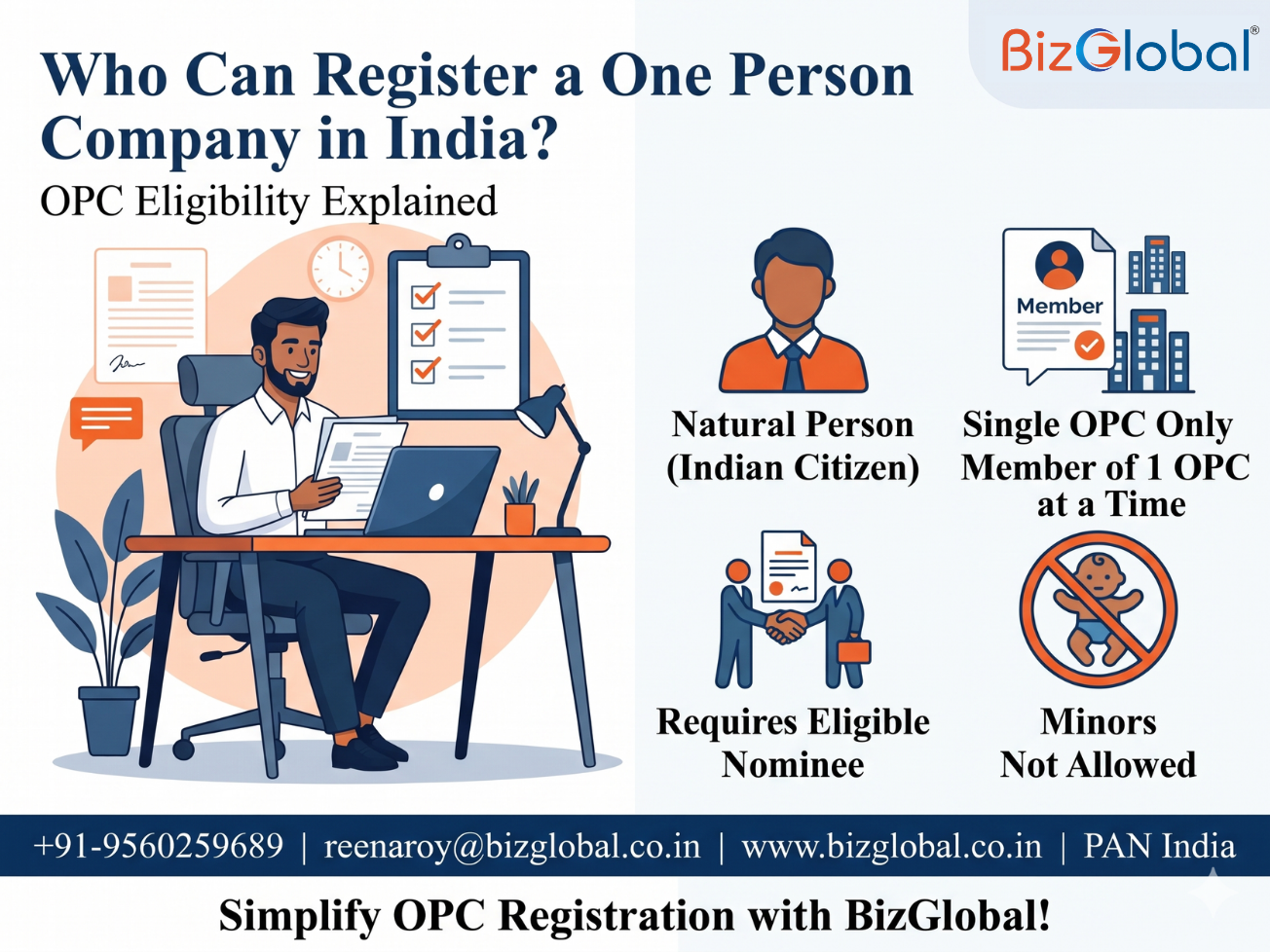
You may like the idea of starting a business as a One Person Company, but before beginning the incorporation process, there is an important question to answer: Are you eligible to form an OPC?
A One Person Company is designed for a single-member company structure, but that does not mean every individual or every business activity automatically qualifies. The Companies Act, 2013 and the applicable incorporation rules lay down specific conditions relating to the member and nominee.
Understanding these requirements at the beginning can help entrepreneurs avoid choosing the wrong business structure or facing unnecessary procedural issues later.
The Quick Answer: Who Can Form an OPC?
Under the current framework of the Companies (Incorporation) Rules, a natural person who is an Indian citizen may form a One Person Company, whether resident in India or otherwise.
The person must also meet the applicable conditions relating to membership in an OPC. A person cannot be a member of more than one OPC at the same time.
OPC Eligibility in India: A Practical Checklist
Before proceeding with incorporation, consider the following key requirements.
1. The Member Must Be a Natural Person
An OPC is built around an individual member. The applicable rules refer to a natural person as the person who can incorporate and hold membership in an OPC.
This means that the OPC structure is intended for an individual entrepreneur rather than an entity seeking to become the sole member of another company.
2. The Member Must Be an Indian Citizen
One of the key conditions for OPC eligibility in India is Indian citizenship.
The 2021 amendment clarified that an Indian citizen may incorporate an OPC whether resident in India or otherwise. Therefore, residency status should not be confused with citizenship. An entrepreneur should examine both concepts separately when assessing eligibility.
3. A Person Cannot Be a Member of More Than One OPC
The OPC framework restricts a person from being a member of more than one One Person Company at any point in time.
This is an important requirement for entrepreneurs who are already associated with an OPC and are considering incorporating another one. Before beginning a new incorporation process, their existing membership position should be reviewed carefully.
4. A Nominee Is Required
An OPC incorporation also involves nominating another eligible person.
The nominee gives consent to become the member of the company in the event of the sole member's death or incapacity to contract, in accordance with the applicable legal framework. This requirement should not be treated as a mere formality. The proposed nominee's eligibility and consent should be checked before incorporation.
For a detailed explanation, read our guide on OPC Nominees: Role, Requirements and Important Things to Know.
5. The Nominee Must Also Meet Applicable Eligibility Conditions
The nominee must satisfy the relevant requirements under the current rules. The MCA's guidance for the nominee consent form states that the nominee should be an Indian citizen and resident in India.
Because nominee-related requirements and forms are procedural and legal in nature, the current MCA requirements should always be reviewed at the time of incorporation.
6. A Minor Cannot Become an OPC Member or Nominee
A minor cannot be a member or nominee of a One Person Company.
This is one of the important restrictions to consider when choosing a nominee and assessing whether the OPC structure can be used for a particular ownership arrangement.
Who Cannot Form an OPC?
In simple terms, the OPC structure is not available in every situation.
For example, a person who does not meet the applicable citizenship requirement cannot incorporate an OPC under the current rule framework. Similarly, an individual cannot hold membership in more than one OPC at the same time.
A person should also remember that an OPC is intended to have a single member. If the business plan already involves multiple co-founders or shareholders, another company structure may be more appropriate.
The right structure should therefore be selected based not only on current eligibility but also on the future direction of the business.
How BizGlobal Can Help?
Understanding eligibility requirements is an important first step before beginning the incorporation process.
BizGlobal can help entrepreneurs understand the applicable requirements, review the information needed for incorporation and organise the necessary documentation and procedural steps based on their business requirements.