
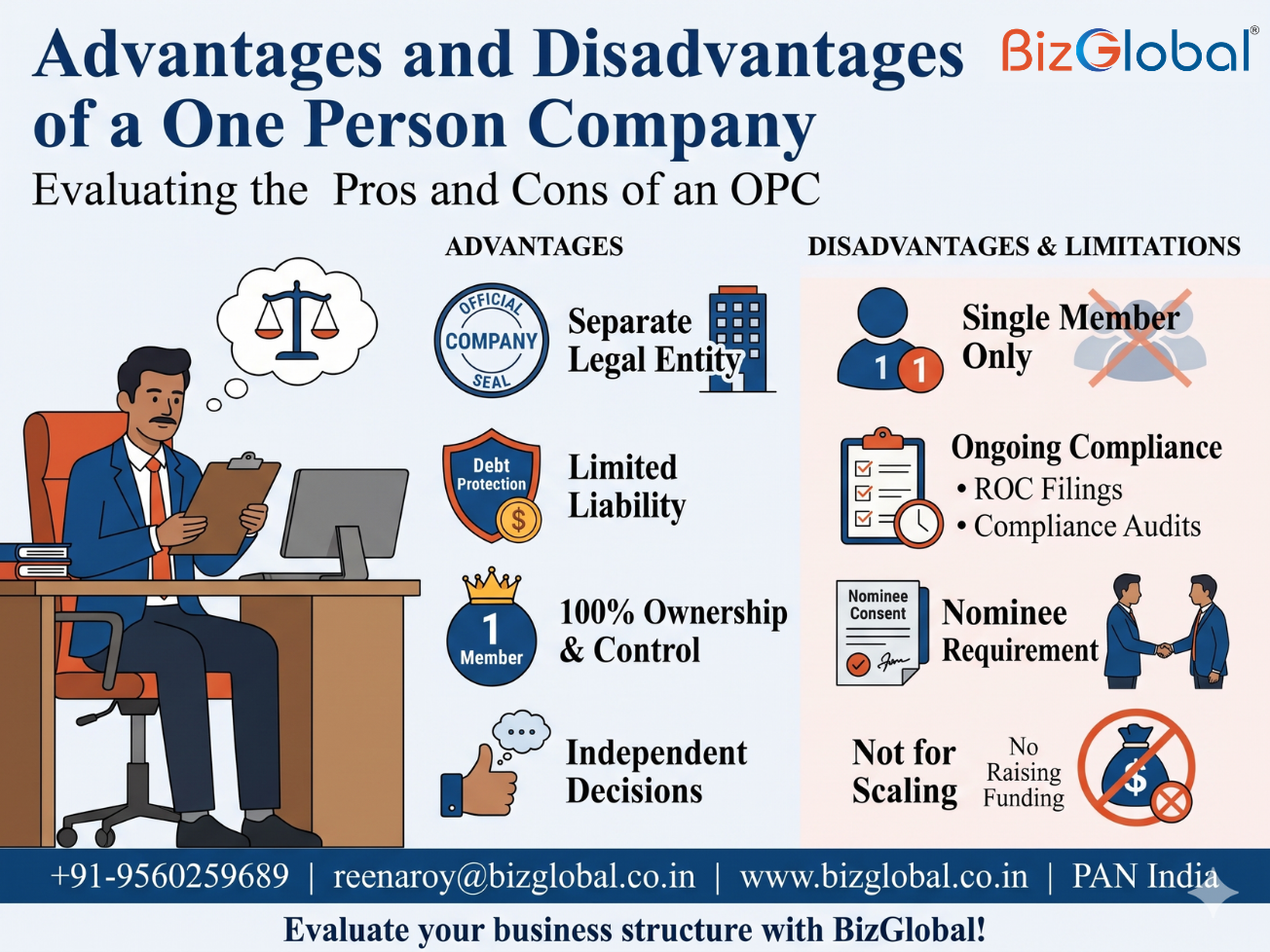
Choosing a business structure is not just about completing the incorporation process. The structure you choose can affect ownership, decision-making, compliance responsibilities and your plans for future growth.
For a solo entrepreneur, a One Person Company, or OPC, can appear to offer the best of both worlds: the independence of running a business alone and the formal structure of a company. However, like every business structure, an OPC has both advantages and limitations.
Before incorporating, it is important to look beyond the benefits and understand the practical trade-offs. This guide explains the advantages and disadvantages of OPC to help entrepreneurs make a more informed decision.
What Is a One Person Company?
A One Person Company is a company with one person as its member under the framework of the Companies Act, 2013.
If you are still exploring the basics, read our guide on One Person Company in India: Meaning, Features, Eligibility and Benefits before comparing its pros and cons.
Advantages of a One Person Company
1. Separate Legal Entity
One of the key benefits of an OPC is that it operates as a company with a legal identity separate from its member.
This distinction can be important for entrepreneurs who want to operate their business through a formal corporate structure. Subject to the applicable legal framework, the company can own assets, enter into contracts and carry on business in its own name.
2. Limited Liability
An OPC provides the limited liability feature generally associated with a company structure.
In simple terms, the company's legal and financial obligations are separate from the personal identity of its member. However, limited liability should not be misunderstood as absolute protection from every legal or financial responsibility. The actual legal position can depend on the circumstances and applicable law.
3. Single Ownership and Control
A major advantage of an OPC is that one person can remain the sole member of the company.
This can make the ownership structure straightforward. A solo founder does not need to share ownership simply because they want to operate through a company structure.
4. Independent Decision-Making
With one member, the entrepreneur retains control over ownership decisions.
This may be useful for founders who want to make business decisions independently and maintain a simple ownership structure. Of course, company decisions must still be made in accordance with the Companies Act, the company's constitutional documents and other applicable legal requirements.
5. Formal Business Structure
Operating through a company can provide a more formal organisational framework than operating as an individual proprietor.
This may be relevant where the entrepreneur wants to establish clear business processes, maintain company records and build a business that operates through a separate corporate entity.
6. Flexibility for Future Business Planning
Business requirements can change over time. A solo founder may eventually want to change the ownership structure or move to another type of company.
The current OPC framework provides for conversion into another type of company, subject to applicable legal requirements and procedures. This gives entrepreneurs an opportunity to reassess their structure as their business evolves.
Disadvantages and Limitations of an OPC
The advantages of an OPC are meaningful, but they should be weighed against the limitations.
1. It Is Designed for a Single Member
The single-member structure is also one of the main limitations of an OPC.
If you already have a business partner or know that you will soon bring in a co-founder, an OPC may not be the most practical starting point. In that situation, another business structure may better reflect the intended ownership arrangement.
2. Ongoing Compliance Responsibilities
An OPC may offer certain procedural relaxations under company law, but it is still a company and has ongoing statutory and regulatory responsibilities.
Entrepreneurs should not assume that incorporation is the final step. The company may have obligations relating to financial records, statutory filings and other applicable compliance requirements.
3. Nominee Requirements
An OPC requires a nominee arrangement in accordance with the applicable legal framework.
A nominee is not simply a second shareholder or business partner. The role has a specific legal purpose, and the relevant requirements should be understood before incorporation.
4. It May Not Suit Every Growth Strategy
An OPC may work well for a solo founder, but business plans can change.
Choosing a structure based only on present circumstances without considering future plans can create avoidable procedural work later.
5. Professional and Procedural Requirements
A company structure involves formal legal and procedural requirements.
Entrepreneurs must be prepared to maintain appropriate records and understand their responsibilities after incorporation. For a business owner looking for the simplest possible structure, it is important to compare the ongoing requirements of an OPC with other available options.
How BizGlobal Can Help?
Choosing a business structure is an important decision, particularly for first-time entrepreneurs.
BizGlobal can help entrepreneurs understand the applicable requirements of different business structures and organise the information needed to take the next procedural step.