
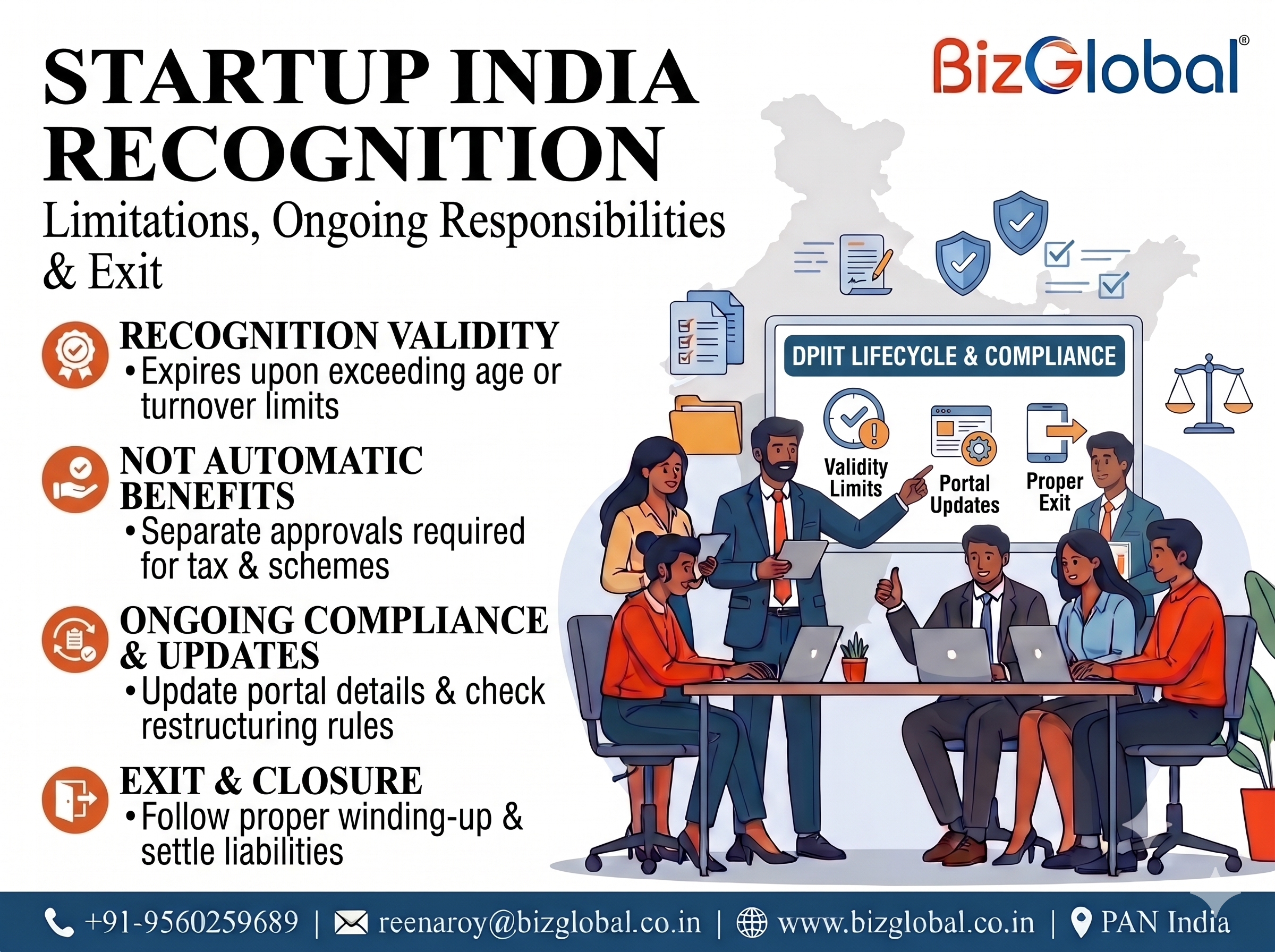
Obtaining recognition from the Department for Promotion of Industry and Internal Trade (DPIIT) can help eligible startups access certain government initiatives and benefits. However, recognition is not a permanent entitlement to every startup benefit, nor does it remove the business’s ongoing legal responsibilities.
As a startup grows, its turnover, age, ownership structure and business operations may change. Founders and compliance teams must understand how these developments affect eligibility, what information needs updating and what steps to consider when a business closes or restructures.
Understanding DPIIT startup recognition limitations helps businesses manage their recognition status responsibly and avoid assuming that a certificate automatically guarantees every available benefit.
How Long Is DPIIT Startup Recognition Valid?
Under the revised framework announced in February 2026, the eligibility conditions has been revised. To understand the eligibility conditions of a Startup, read our detailed guide on Startup India Registration: Eligibility Criteria.
Recognition eligibility can cease when the applicable age limit is completed or the entity exceeds the relevant turnover threshold in any financial year since incorporation or registration. The business must also continue to meet the other applicable conditions.
Practical takeaway: Track the incorporation date and turnover history, and confirm the applicable DeepTech classification and criteria before relying on the extended limits.
Does Recognition Guarantee Every Startup Benefit?
No. DPIIT recognition and eligibility for individual benefits are separate matters.
Depending on the benefit, a startup may need to satisfy additional conditions, submit a separate application or obtain approval from the relevant authority. Tax concessions, for example, are governed by their own eligibility requirements and procedures.
Founders should therefore identify the specific benefit they intend to use, verify its conditions and maintain evidence supporting their eligibility.
What Happens When Startup Eligibility Changes?
A recognised startup should periodically review whether its business continues to satisfy the applicable recognition criteria.
The consequences depend on the specific change and the governing framework. For example, the published recognition conditions identify certain holding-company, subsidiary and joint-venture arrangements as grounds for derecognition. A startup considering such a transaction should examine the applicable rules before proceeding
A corporate restructuring should not be undertaken on the assumption that the existing recognition certificate will automatically remain valid.
Why Should Startups Update Their DPIIT Details?
Accurate information is important for recognition records and applications for benefits. Businesses should review their recognition certificate and portal details when relevant corporate information changes.
Depending on the change, this may involve reviewing the entity name, registered details, incorporation documents or CIN/LLPIN information. The Startup India portal provides procedures and guidance for certain changes, including specific CIN/LLPIN changes arising from conversion or a change in domicile state. These changes are subject to the applicable conditions and approvals.
Startups should use the official portal and follow the prescribed procedure rather than assuming that updating MCA records automatically updates every government database.
What If a Startup Plans to Close or Wind Up?
A startup that stops operating should not assume that inactivity alone formally closes the entity or completes its regulatory responsibilities.
The appropriate closure route depends on the legal structure and circumstances. A company may need to examine applicable strike-off or winding-up procedures, while an LLP or partnership follows the requirements relevant to its form. Outstanding filings, employee dues, creditor obligations, tax matters and other liabilities should be assessed before closure.
Get Professional Guidance on Startup Recognition and Compliance
Before changing ownership, restructuring, applying for a benefit or closing a business, founders should review their recognition status, corporate records and outstanding obligations. The appropriate steps depend on the transaction and the entity’s legal structure.
BizGlobal may be considered for relevant compliance support, subject to confirmation of service availability and the specific requirements involved. Where necessary, seek qualified legal, tax or insolvency advice before making a significant structural or closure decision.
Disclaimer: This article is for general informational purposes only and does not constitute legal, tax or financial advice. Verify the latest applicable notification and procedural requirements before taking action.