
Building a startup involves more than developing a product or having a promising business idea. Founders also need mentorship, industry connections, technical infrastructure and guidance to turn an idea into a sustainable business.
This is where startup incubators in India can play an important role. Incubators support early-stage businesses by providing structured guidance, workspace, networking opportunities and, in some programmes, access to funding.
However, not every incubator offers the same services or accepts startups at the same stage. Choosing the right incubation programme requires understanding your business needs, eligibility and the support actually available.
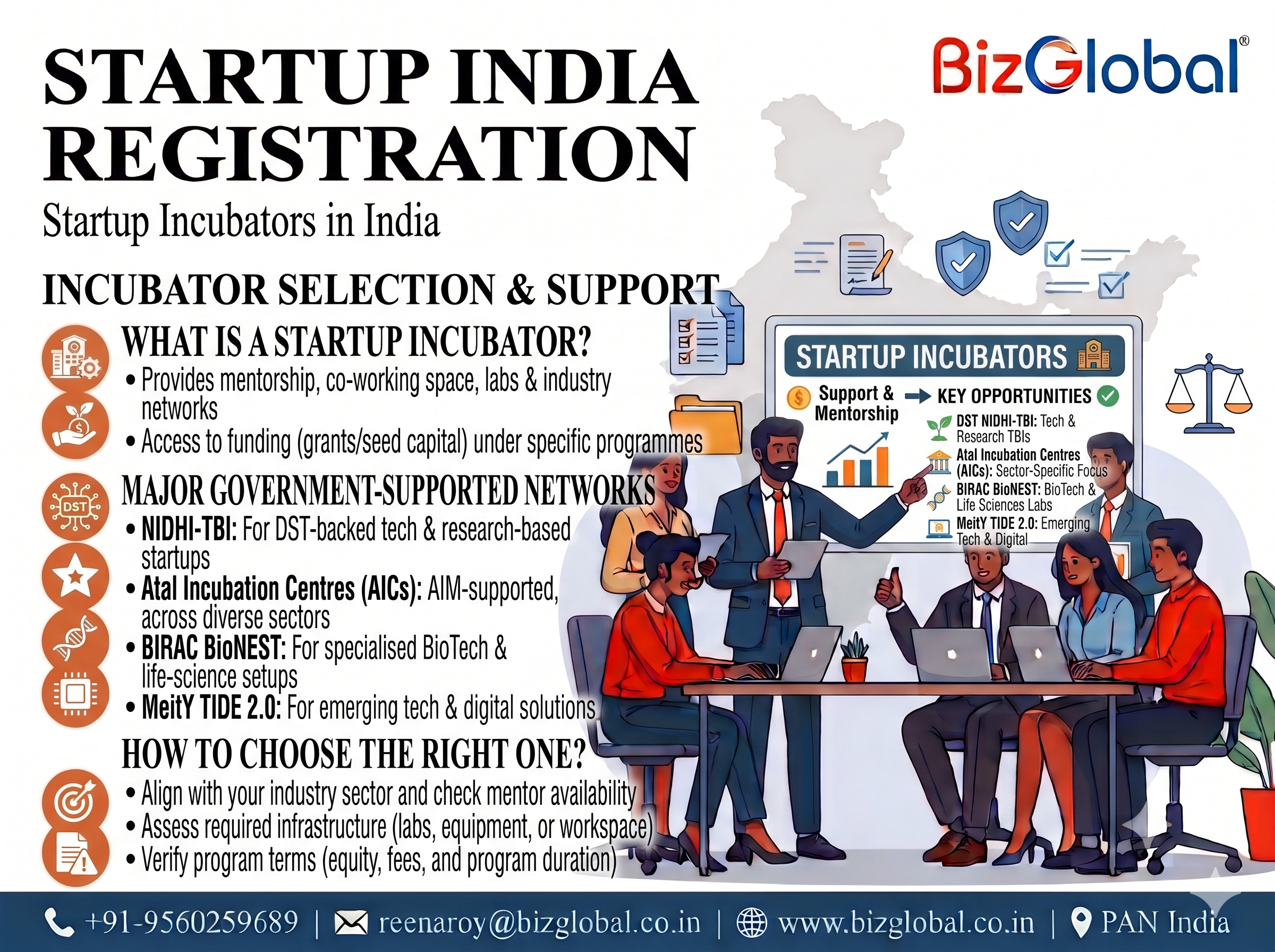
What Is a Startup Incubator?
A startup incubator is an organisation or institution that helps early-stage businesses develop and grow. It provides an environment where founders can test ideas, build prototypes, improve business models and connect with relevant experts.
Depending on the programme, incubation support may include:
- Business planning and startup mentorship.
- Workspace and co-working facilities.
- Technical infrastructure, laboratories and testing facilities.
- Legal, financial and intellectual property guidance.
- Investor and industry connections.
- Market access and business development support.
- Access to grants or seed funding under specific programmes.
Incubation is not necessarily a funding programme. Some incubators primarily provide mentoring and infrastructure, while others may facilitate access to financial assistance.
Major Government-Supported Incubation Programmes in India
Founders can explore several government-supported incubation initiatives depending on their sector and stage.
A. NIDHI Technology Business Incubators (NIDHI-TBI)
Supported by the Department of Science and Technology (DST), NIDHI-TBIs promote technology- and innovation-based startups. They are generally associated with academic, technical and research institutions.
They can provide mentoring, technical facilities, business support and assistance with commercialising research-based innovations. Startups apply directly to individual TBIs when they announce calls for applications.
B. Atal Incubation Centres (AICs)
Supported under the Atal Innovation Mission of NITI Aayog, AICs aim to nurture innovative startups through infrastructure, sector-specific expertise, business planning support, industry partnerships and access to potential seed capital.
Many centres focus on areas such as healthcare, agriculture, manufacturing, education, energy and technology. Founders should review the focus and admission requirements of individual centres.
C. BIRAC BioNEST
For startups working in biotechnology and life sciences, BioNEST provides a specialised incubation ecosystem. It supports biotech innovation through facilities and institutional incubation networks.
It may be particularly relevant to founders developing healthcare, biotechnology or life-science solutions.
D. MeitY TIDE 2.0
The Technology Incubation and Development of Entrepreneurs (TIDE 2.0) initiative supports technology-led entrepreneurship through eligible incubators, particularly in areas involving emerging technologies and digital solutions. Availability and admission conditions should be checked with participating centres.
Who Can Apply for Incubation?
Eligibility depends on the incubator and the programme. Some accept individuals with early-stage ideas, while others require an incorporated entity or a working prototype.
Founders should read the specific admission guidelines before applying. DPIIT recognition may be required for certain government schemes, but it is not a universal requirement for every incubation programme.
How to Choose the Right Incubator?
Before applying, consider the following:
- Sector alignment: Choose an incubator with experience in your industry.
- Mentorship quality: Check the expertise and availability of mentors.
- Infrastructure: Determine whether you need laboratories, testing facilities, manufacturing support or simply workspace.
- Funding access: Understand whether the incubator offers funding, facilitates investor connections or only provides non-financial support.
- Industry network: Review its corporate partnerships, investor network and alumni startups.
- Programme terms: Check duration, fees, equity requirements, intellectual property terms and exit conditions.
An incubator's reputation alone should not determine your decision. The quality and relevance of its support matter more.
How Does the Incubator Application Process Work?
Although procedures vary, the general process includes identifying suitable incubators, reviewing admission calls, preparing an application and presenting the business idea.
Founders may be asked to submit:
- Business plan or pitch deck.
- Founder profiles and team details.
- Product or prototype information.
- Market research and competitor analysis.
- Financial projections.
- Incorporation and DPIIT recognition documents, if applicable.
The incubator may conduct interviews, evaluate the proposal and undertake due diligence before selecting applicants. Read the incubation agreement carefully before accepting admission.
Get Professional Guidance While Preparing Your Startup
Before applying, founders should organise their business information, incorporation records and relevant supporting documents. They should also understand the legal and compliance requirements applicable to their business.
BizGlobal may be considered for relevant startup compliance or documentation support, subject to confirmation of service availability and the specific requirements involved.
Disclaimer: This article is for general informational purposes only. Programme availability, eligibility and application procedures may change. Verify the latest guidelines with the relevant incubator or government department before applying.